
Root Barrier Dallas
Root barrier installation in Dallas, Texas
Vertical HDPE walls in Blackland clay: cedar elms, parkway oaks, slabs, laterals, bamboo, and commercial islands from Plano to Fort Worth.
- Keep the tree Isolation, not a default removal.
- Blackland clay We set depth on your lot. Catalog inches are a guess.
- 811 before we cut If a marked line is in the way, we move the trench.
- Real reviews only We will not invent star ratings.
Blackland clay, not a catalog
Dallas trees were planted in strips that will never be wide enough.
Cedar elms in Lakewood, pecans on East Dallas aprons, HOA parkways in Plano and Frisco, post oak on Flower Mound lots, bamboo on west-side fences. The heave is the same physics: a plate at the surface, irrigation all summer, clay that opens a void if you backfill like mulch.
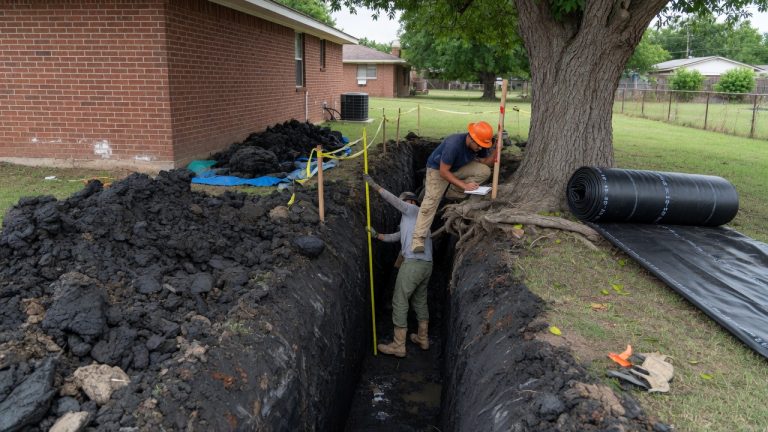
Root Barrier Dallas installs a vertical wall on the house or sidewalk side of the tree. We use HDPE panels — heavy-duty plastic sheet made for soil — lock the joints, and set the depth on your lot. We leave the tree. Grinding a raised sidewalk is a season. A barrier is how you stop the next lift.
We work Dallas–Fort Worth from Plano to Fort Worth, Highland Park to Waxahachie. Call 972-666-9888 or send the form. A crew comes to the property.
A grind is a season. A wall is how the next sidewalk panel, apron, or slab edge stays put. We will not take a healthy oak to flatten a walk, and we will not sell edging as a foundation detail.
Keep the tree. Stop the heave.
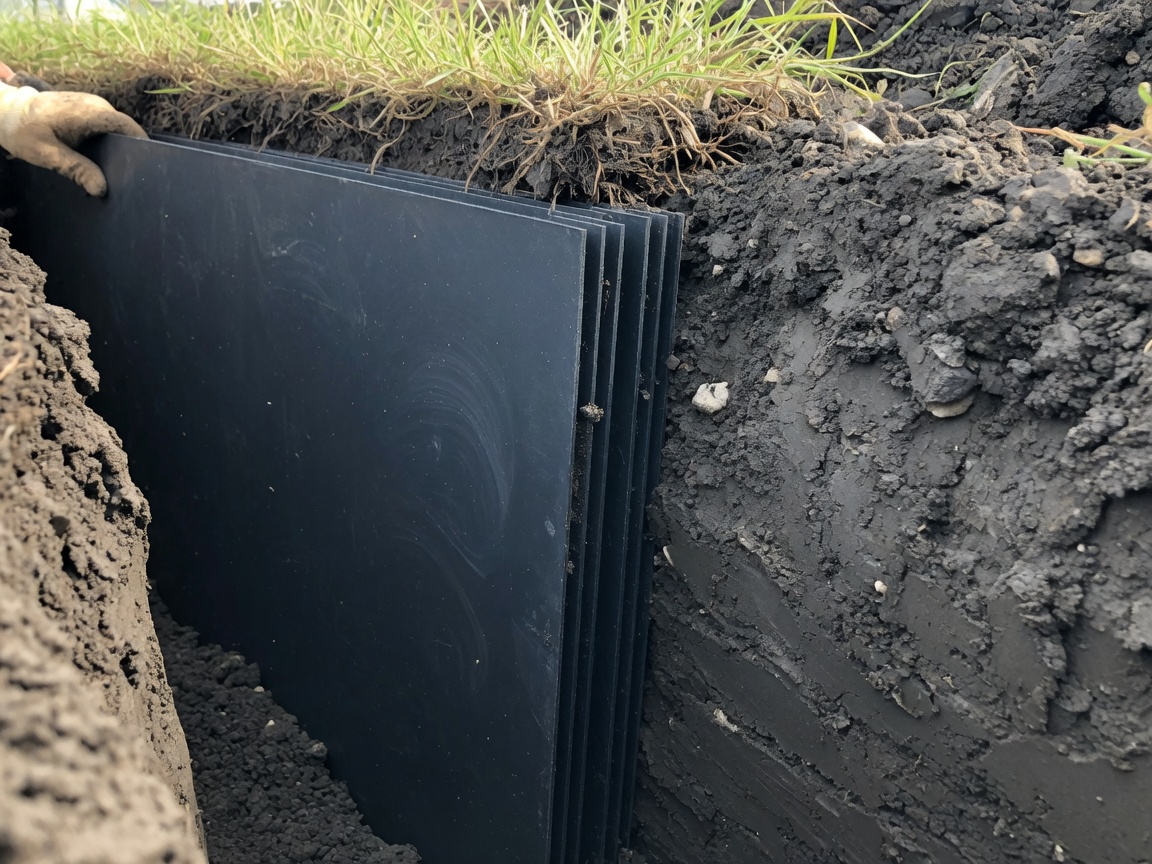
Panel face against Blackland clay — the joint is the job.
What we install
Root barrier work across Dallas–Fort Worth
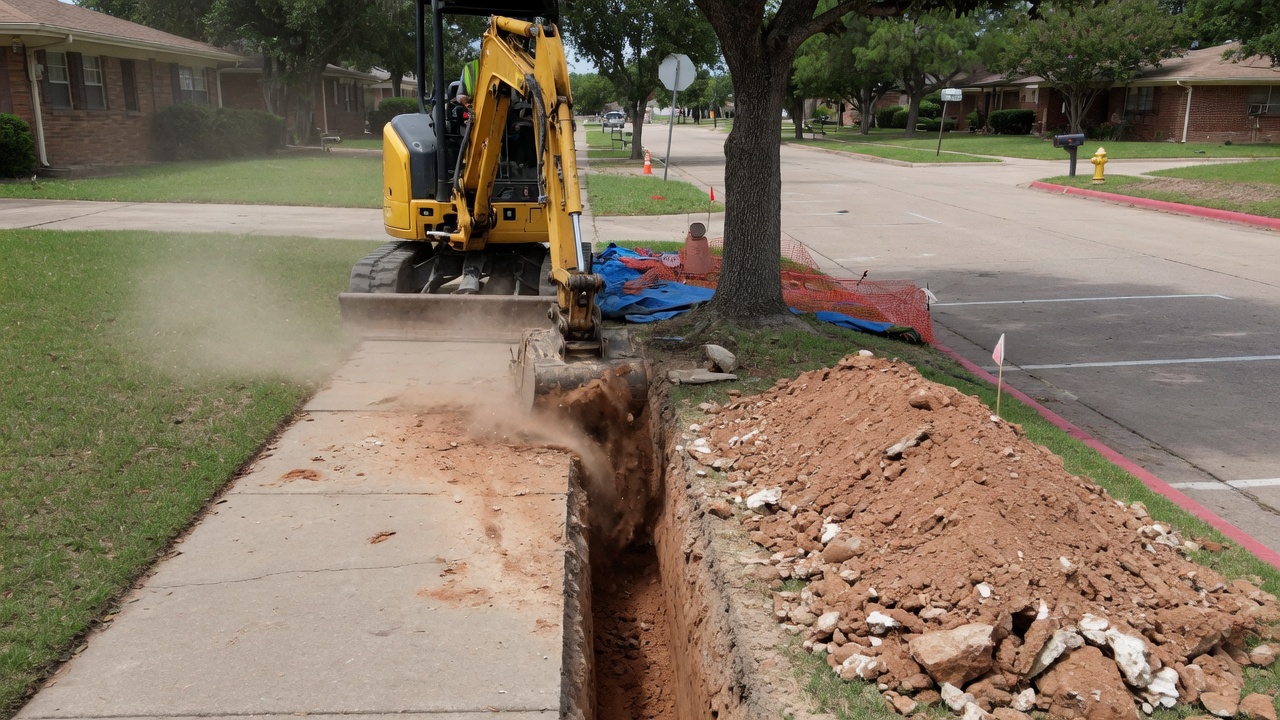
Root Barrier Installation
A root barrier is a vertical wall in the soil. We cut a trench on the structure side of the tree, set…
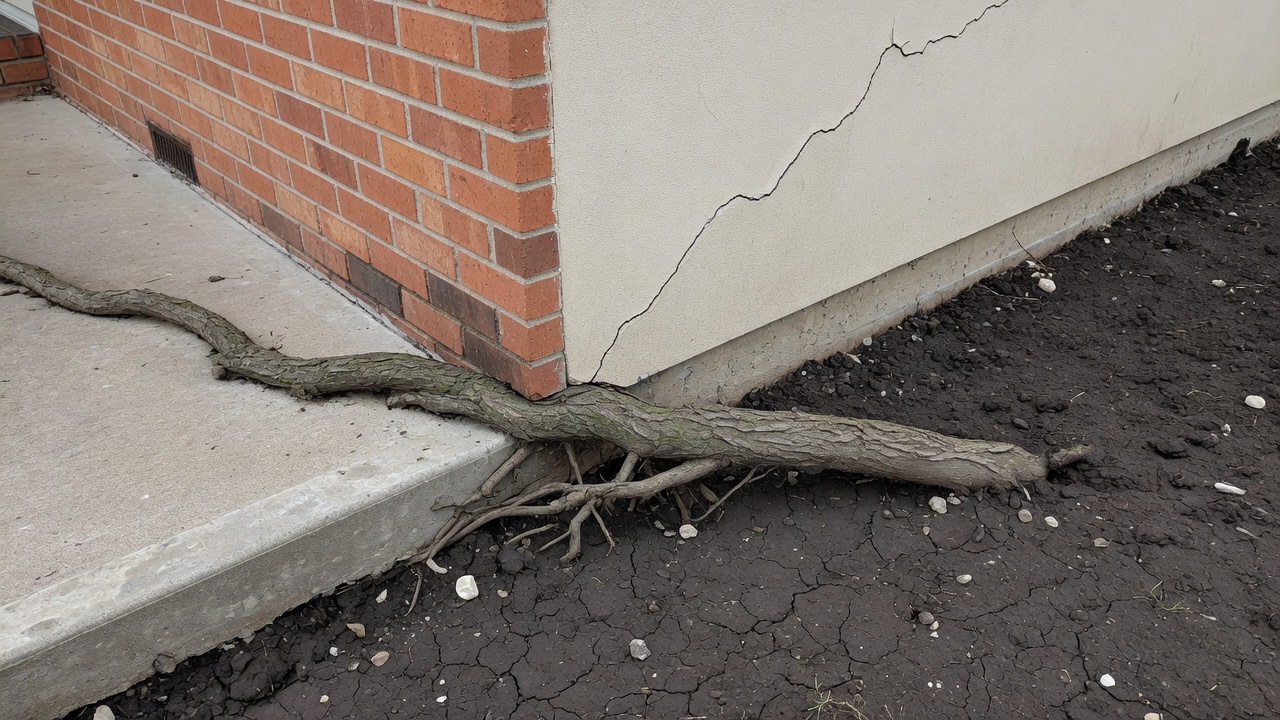
Foundation Root Barrier
Dallas slabs sit on Blackland clay that already moves. A live oak at 8 to 12 feet adds a second motion: roots…
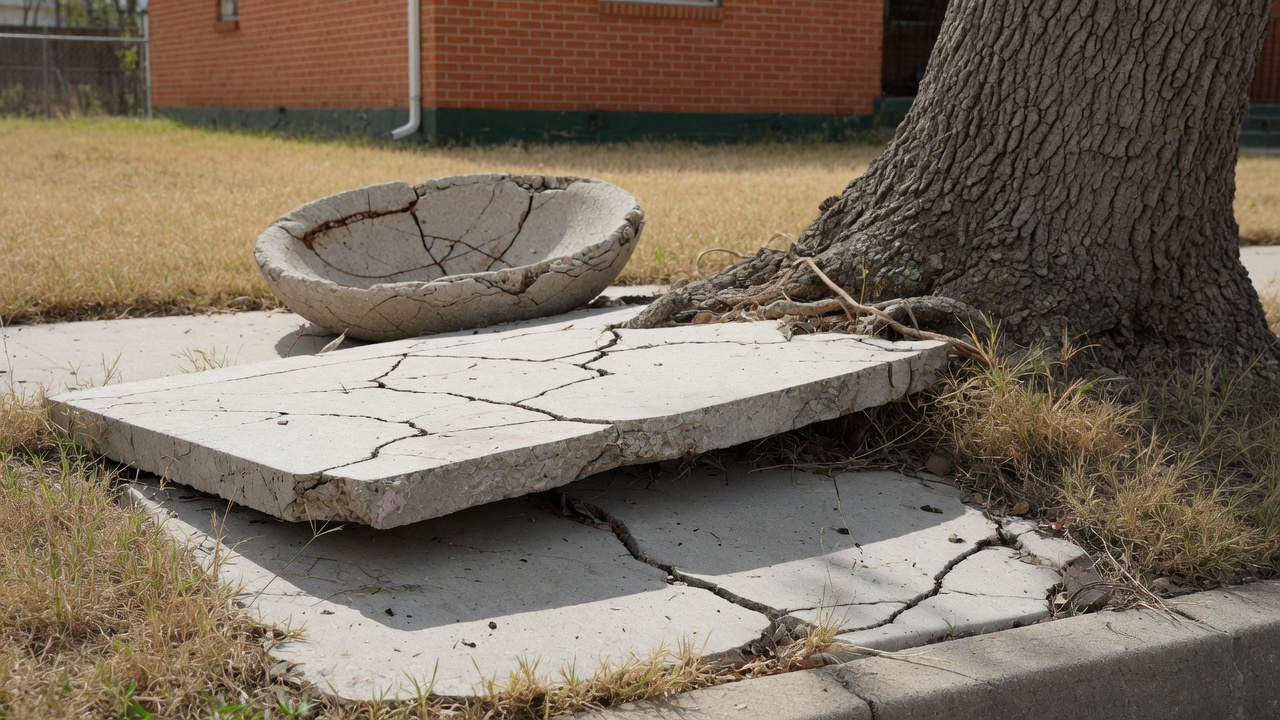
Sidewalk & Driveway Root Barrier
This is the volume job in Dallas–Fort Worth: a parkway oak or cedar elm, a 4-foot strip, and a sidewalk the HOA…
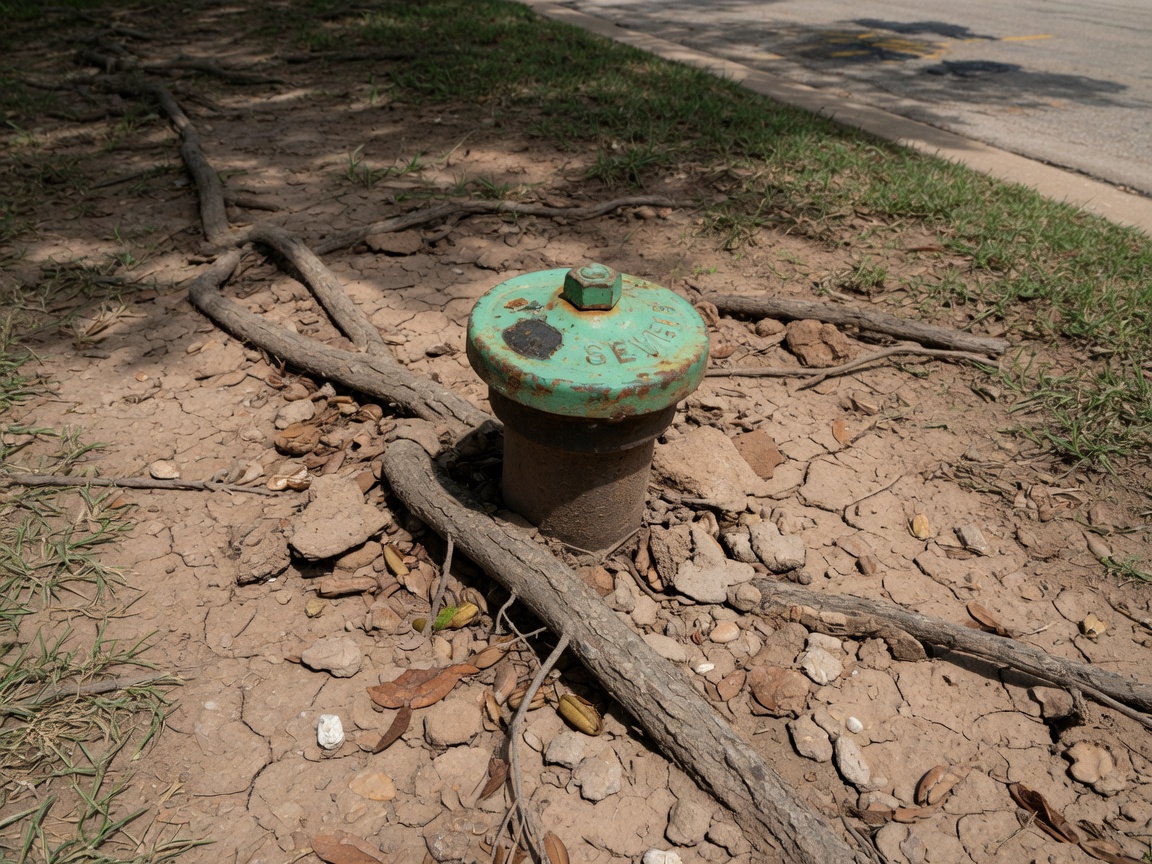
Sewer Line Root Barrier
Roots in a Dallas sewer are a moisture story. Clay and cast-iron joints leak vapor. A pecan or cedar elm finds the…
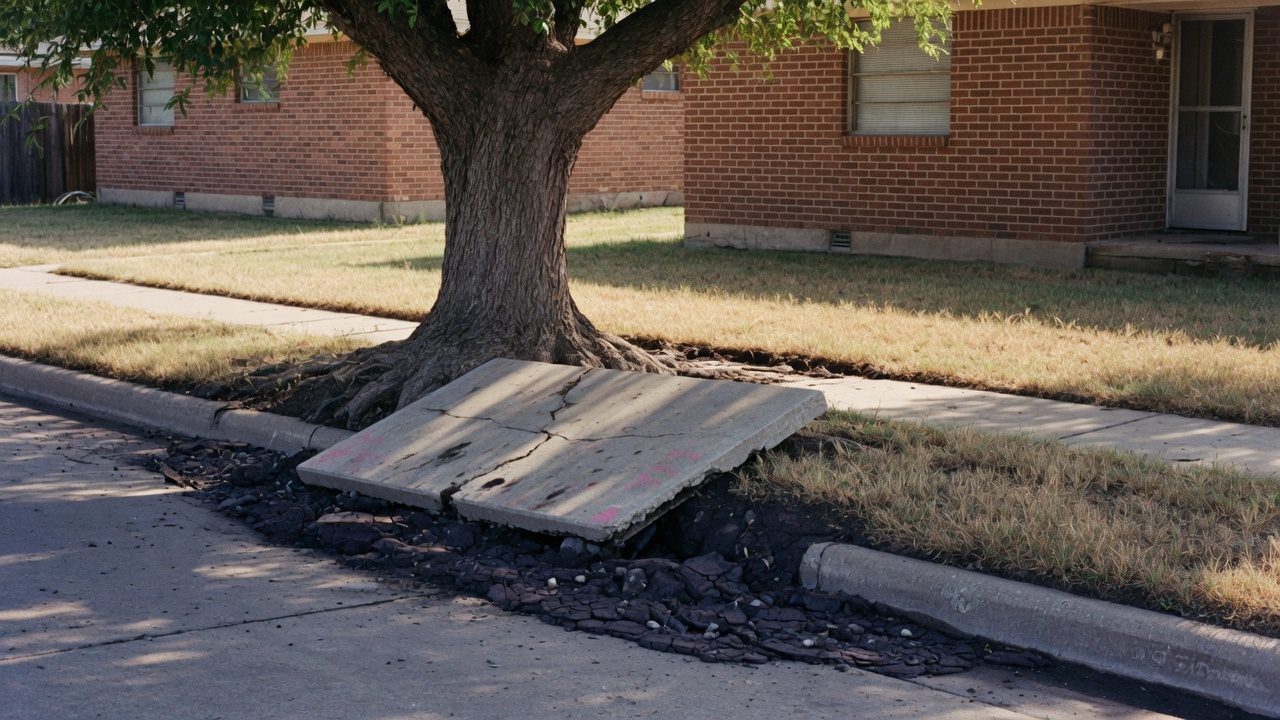
Tree Root Barrier Systems
Dallas–Fort Worth’s problem trees are cedar elm, live oak, pecan, post oak, and bois d’arc — in that order of volume and…
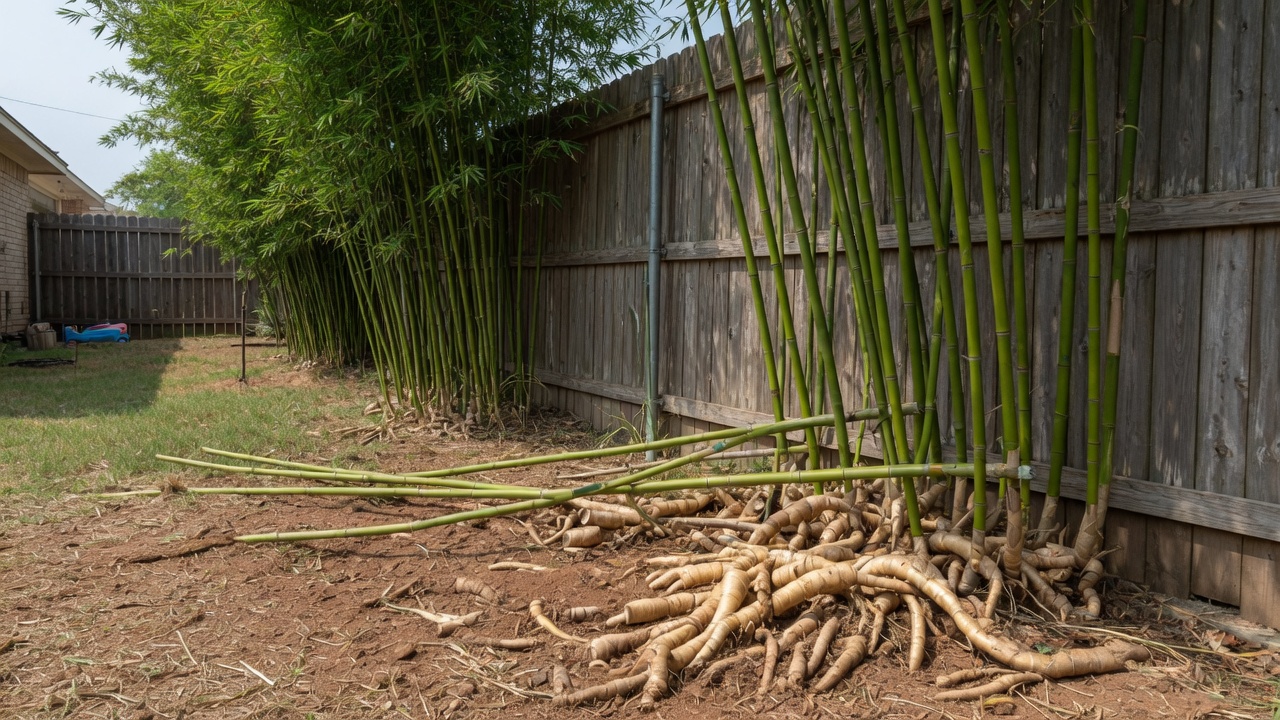
Bamboo Barrier Installation
Running bamboo in Plano, west Dallas, and older Irving lots is not a sidewalk panel. It is a perimeter. Rhizomes travel in…
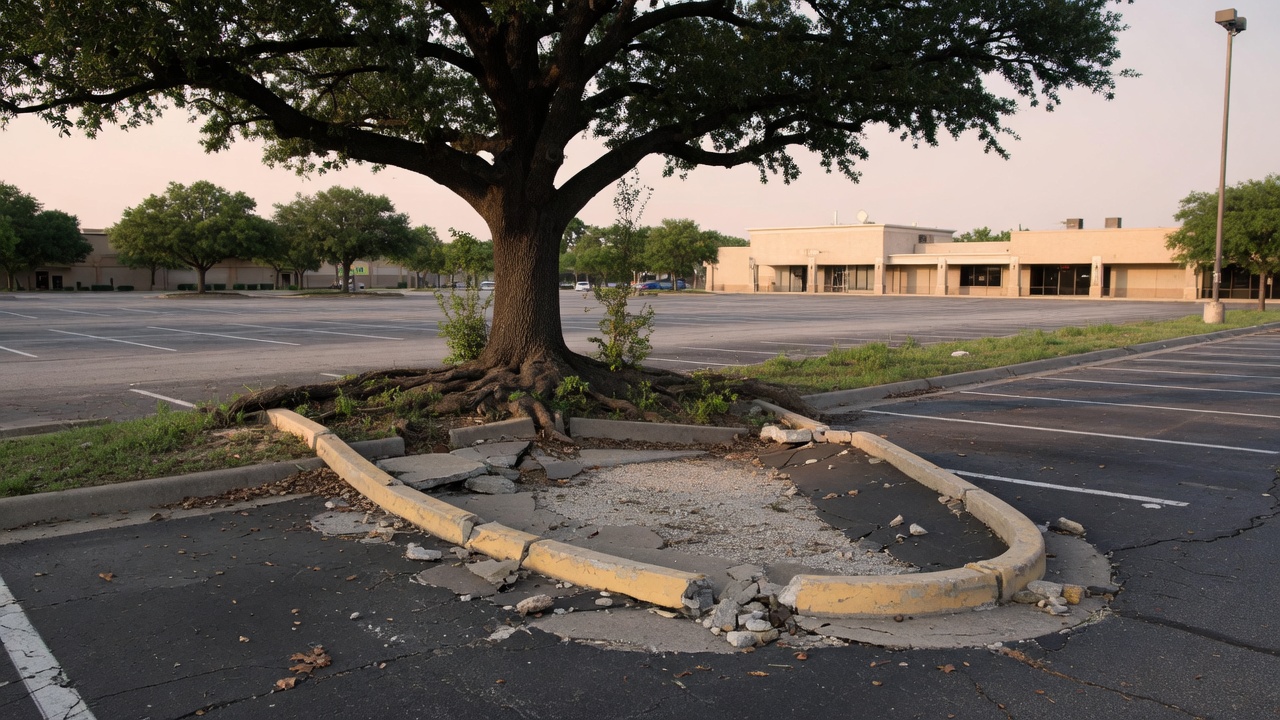
Commercial Root Barrier
Commercial work in Dallas–Fort Worth is parking islands, ADA routes, and HOA common walks. The tree was a landscape spec. Fifteen years…
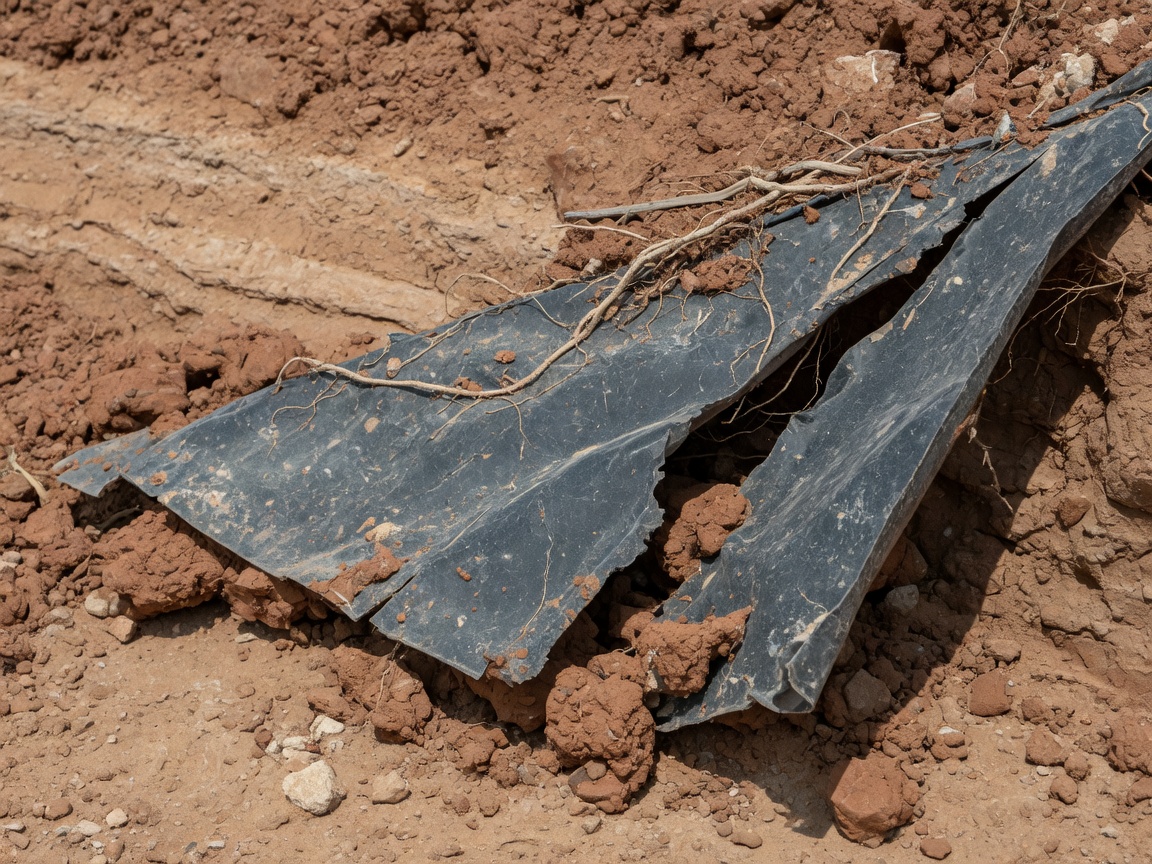
Root Pruning & Barrier
Root pruning without a barrier is a haircut. Dallas trees grow back. We prune on the structure side and set panel in…
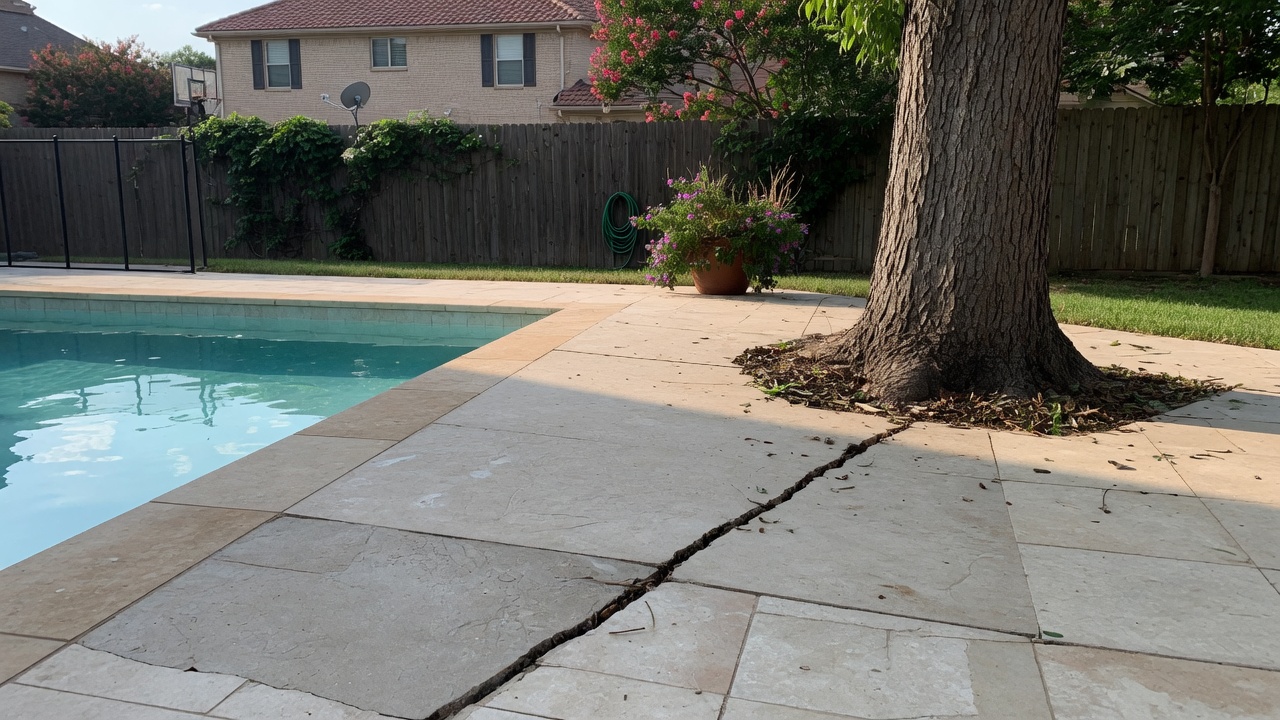
Pool & Hardscape Root Barrier
Dallas–Fort Worth pool decks fail toward the tree. Frisco, Southlake, Flower Mound, and Preston Hollow backyard pecans all show the same crack:…
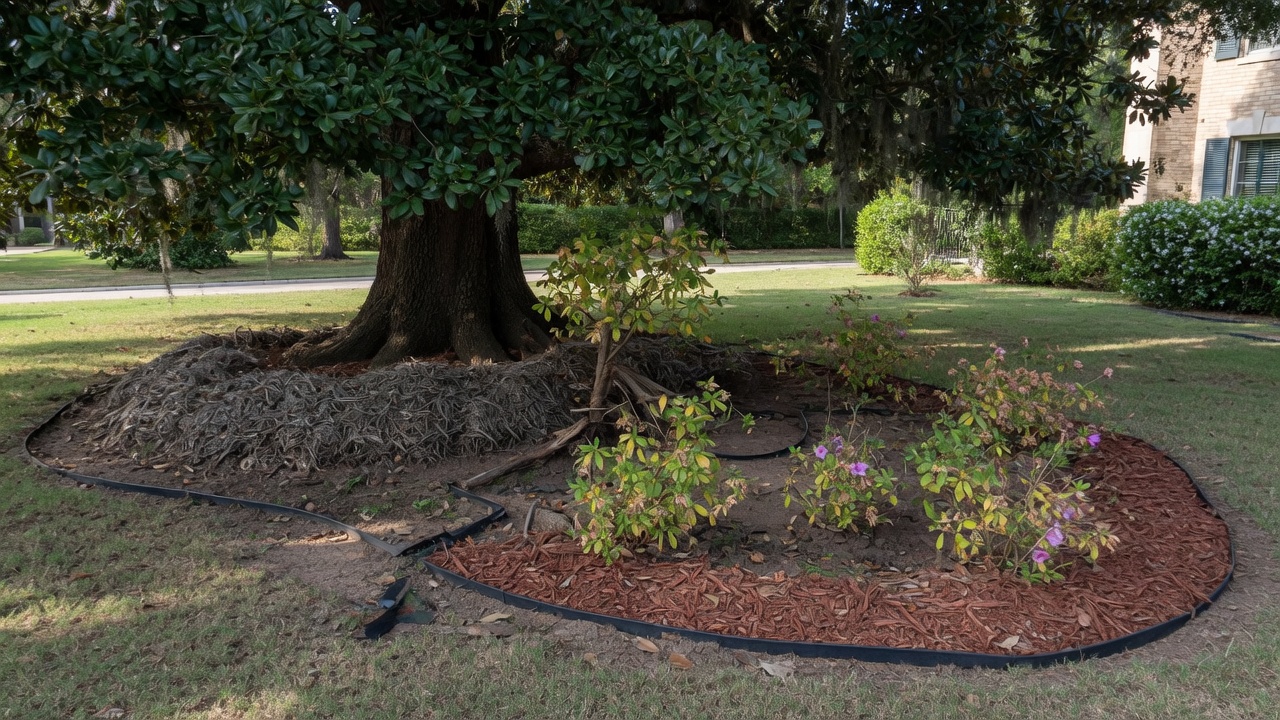
Landscape Bed Root Barrier
Bed liners in Dallas fail because they are thin, shallow, and installed like edging. A landscape root barrier is still a vertical…
HDPE Root Barrier Panels
We install virgin HDPE panels, not landscape edging and not brittle recycled sheet. North Texas sun, Blackland clay, and summer irrigation are…
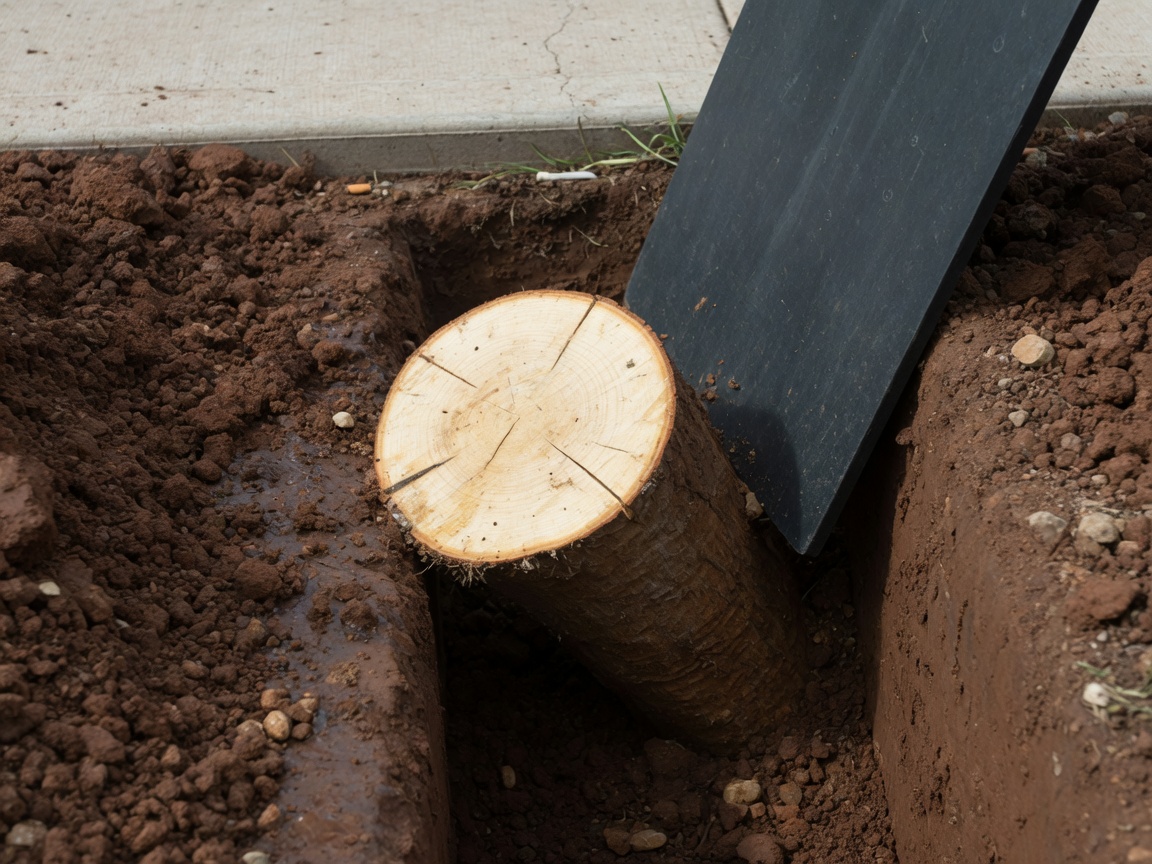
Utility & Infrastructure Root Barrier
Easements in Dallas–Fort Worth are crowded: gas, water, fiber, irrigation, a lateral, and a cedar elm. We locate before we cut. Utility…
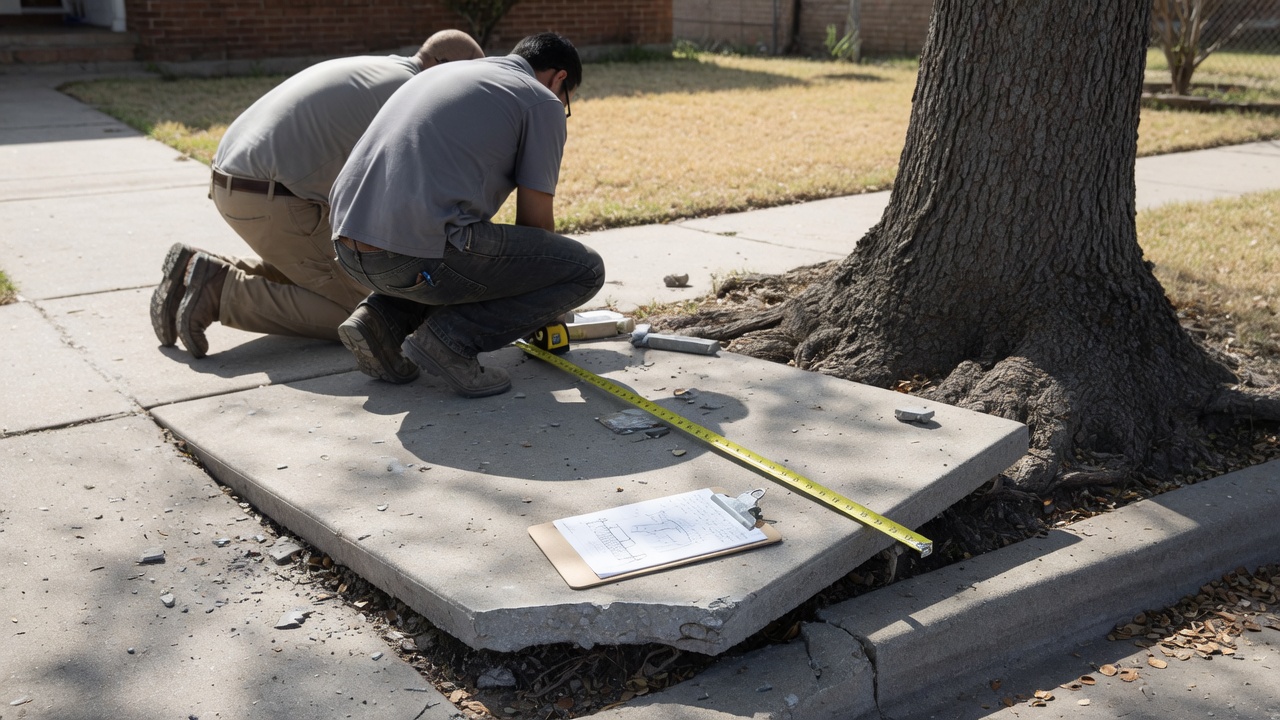
Root Barrier Inspection
An inspection is a walk, a tape, a shovel if we need it, and a written scope. We tell you whether barrier…
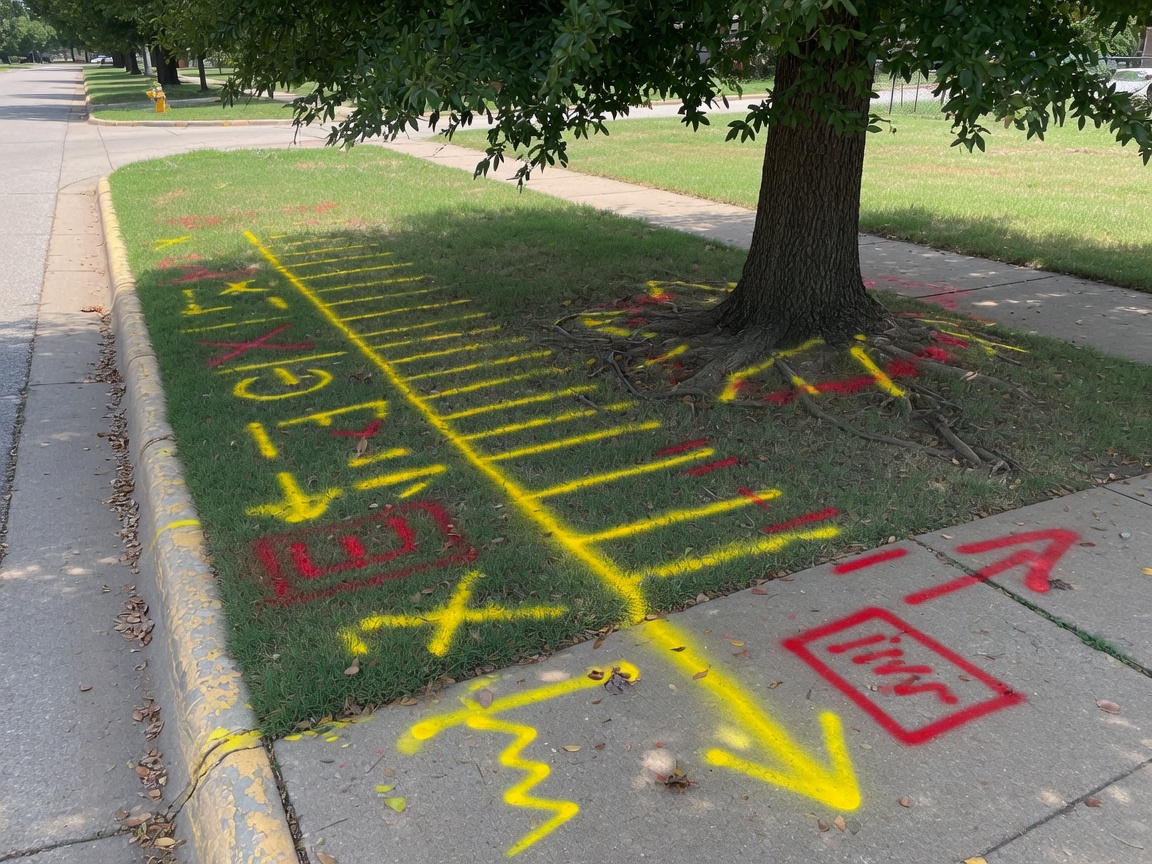
Root Barrier Repair & Replacement
Old barrier in Dallas fails at the joints, at the top edge, and when someone used thin recycled sheet. We pull what…
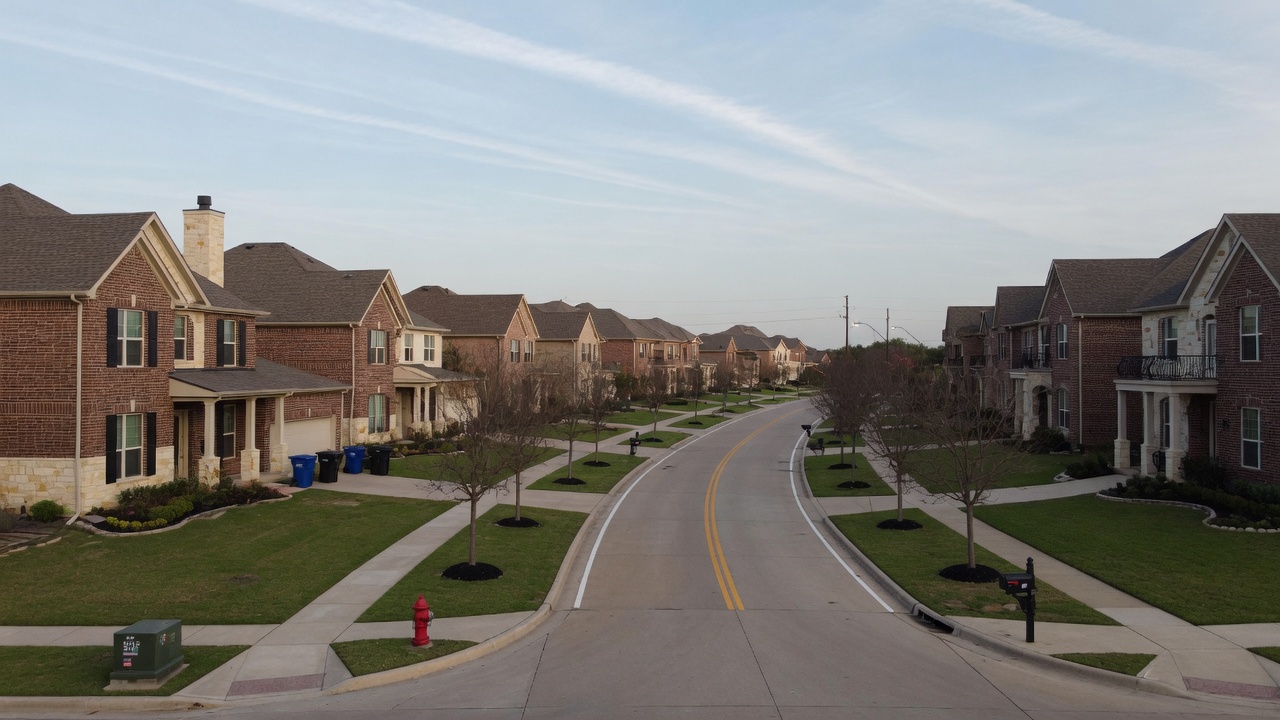
Where we work
Root barrier installation from East Dallas to the suburbs
Blackland clay in Dallas lifts Lakewood sidewalks. Collin HOAs send letters on Plano and Frisco parkways. Flower Mound and Keller are Cross Timber lots. Rockwall is chalk. Waxahachie moves more than a brochure admits. Pick your city for local trees, soil, and how we install on that street.
All cities we serve · Plano · Frisco · Fort Worth · Southlake · Highland Park
- Dallas
- Fort Worth
- Plano
- Irving
- Arlington
- Garland
- Frisco
- McKinney
- Denton
- Richardson
- Carrollton
- Mesquite
- Grand Prairie
- Allen
- Lewisville
- Flower Mound
- Coppell
- Addison
- University Park
- Highland Park
- Farmers Branch
- Rowlett
- Rockwall
- Wylie
- The Colony
- Little Elm
- Prosper
- Celina
- Murphy
- Sachse
- Duncanville
- DeSoto
- Cedar Hill
- Lancaster
- Grapevine
- Southlake
- Keller
- Colleyville
- Hurst
- Euless
- Bedford
- Mansfield
- Waxahachie
How a day goes
Walk the lot. Locate. Trench. Set. Restore.
- Walk the lot We mark the tree, the sidewalk or slab, irrigation, and the sewer cleanout. If a pipe is in the way, we say so before we dig.
- Call 811 Public utilities get marked. If a gas or water line sits in the cut, we move the trench — we do not guess.
- Trench A vertical cut on the house or walk side of the tree. After a hard North Texas storm, Blackland clay turns to soup; we wait or shore the wall.
- Set the panel HDPE seated to the bottom, joints locked so roots cannot thread a gap. Bamboo gets a lip above the mulch.
- Restore We put the parkway back — sod, soil, a walk that looks finished for the HOA or the city.
Request a visit
Name, phone, city, and what is lifting. We call back from 972-666-9888.
Guides
Dallas root barrier guides
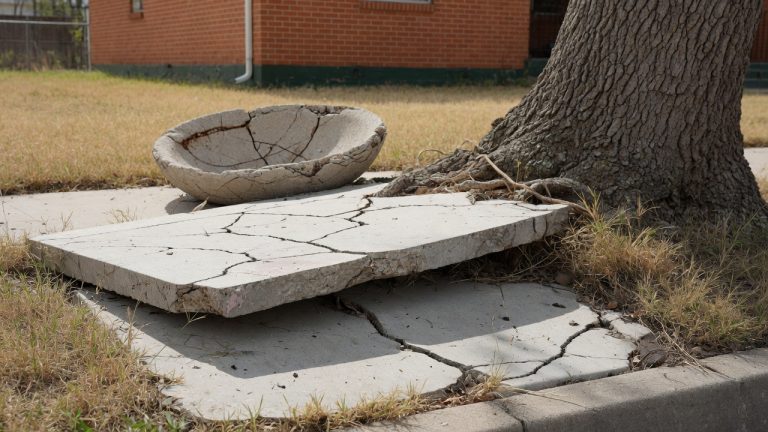
Why we pack Blackland in lifts
Dump spoil and the clay shrinks off the face. The next root uses the gap.
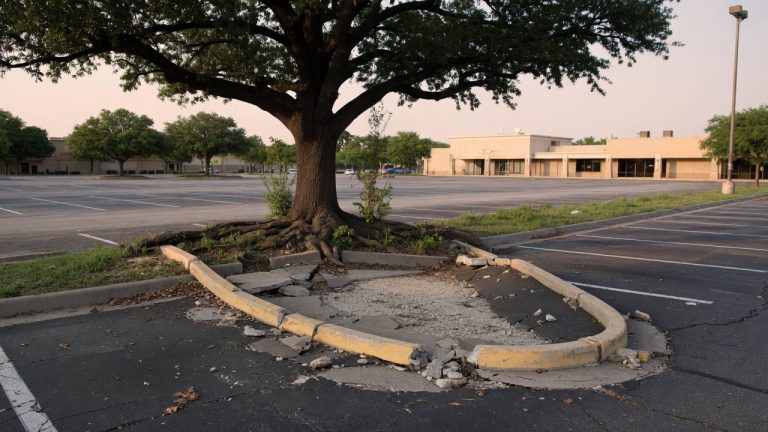
Collin irrigation keeps the top eighteen inches wet
May through September. Roots stay shallow. A wall tells them down and around.
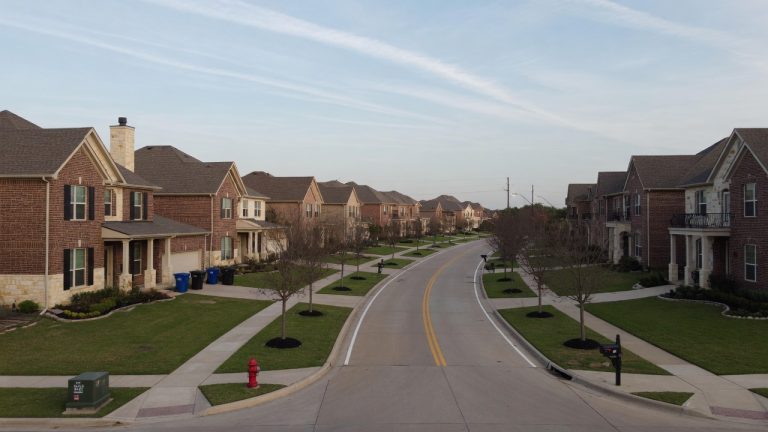
How we treat Oncor and Atmos marks
If the locate puts the line in the trench, we redesign. That is not a delay we apologize for.
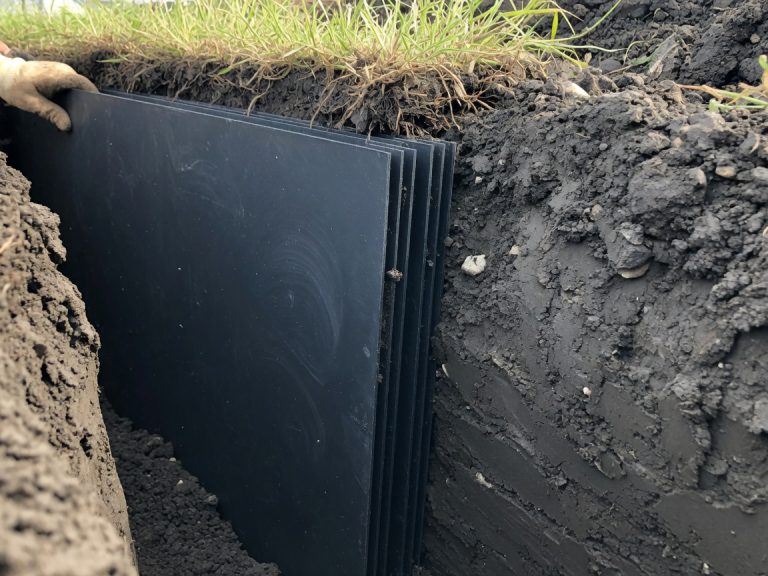
Dallas Uptown infill slabs in old drip lines
New beam, old plate. Prune, panel, keep what canopy is left.
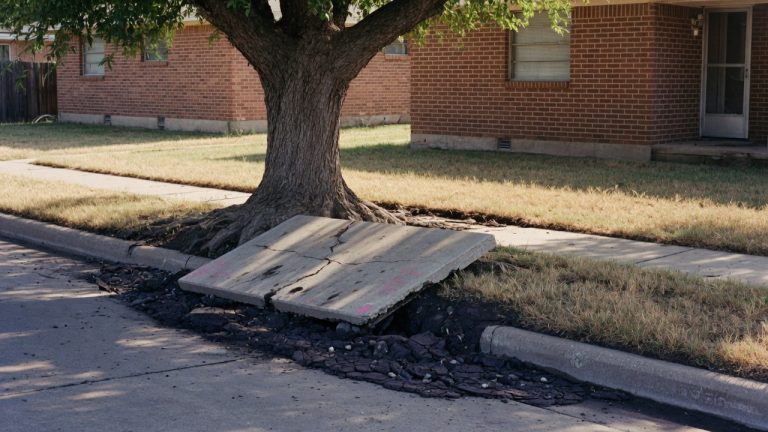
Fort Worth TCU lots are tight
Small lots, pecans, original laterals. Isolation on the beam line.
Rockwall Harbor plus chalk ridge
Lake-view decks and Austin Chalk cuts. Walk the lot.
Questions
How deep is a Dallas root barrier?
Parkway walks are often 24–36 inches. Foundation and lateral jobs go deeper. We measure the plate; we do not guess from a catalog.
Will the tree die?
A healthy oak, pecan, or cedar elm isolated on one side stays. We will not girdle a tree to save a sidewalk.
Do you grind sidewalks?
Grinding is a season. Barrier is a wall. We can grind as a temporary; we would rather isolate so you are not grinding again in two summers.
Do you cover Plano, Frisco, and Fort Worth?
Yes — plus Arlington, McKinney, Southlake, Highland Park, Rockwall, Denton, and the rest of the metro listed on service areas.
Are you a plumber or a foundation company?
No. If the pipe is collapsed or the slab needs piers, we say so. Barrier isolates the tree from the structure.
How do I book?
Call 972-666-9888 or send the form. We come to the property.
Do you have Google reviews?
When our Google Business Profile has live reviews, we will point to them. We do not publish made-up star ratings.
Do you have a shop I visit?
No. We are a mobile crew. We trench on your lot across Dallas–Fort Worth.
What trees cause the most heave in Dallas?
Cedar elm on parkways, live oak on estate lots, pecan on laterals and aprons, post oak on Cross Timber ground. Bamboo is a different liner.
Do you work HOAs in Plano and Frisco?
Yes. We write the scope so the ACC sees a finished parkway, sod match, and a tree that stays.
Do I need a permit?
Park Cities and some city parkways watch restoration. If a permit applies, it is in the quote — not a surprise invoice later.
How long does an install take?
A single parkway run is often a day. Foundation rings, laterals, and bamboo perimeters take longer. We tell you the window on the walk.
What is HDPE?
Heavy-duty plastic sheet made for soil. We use virgin panel, lock the joints, and set it to the roots we uncover — not landscape edging.